
November 13, 2026
Barefoot Dress Shoes for Men: Oxfords, Loafers and How to Choose
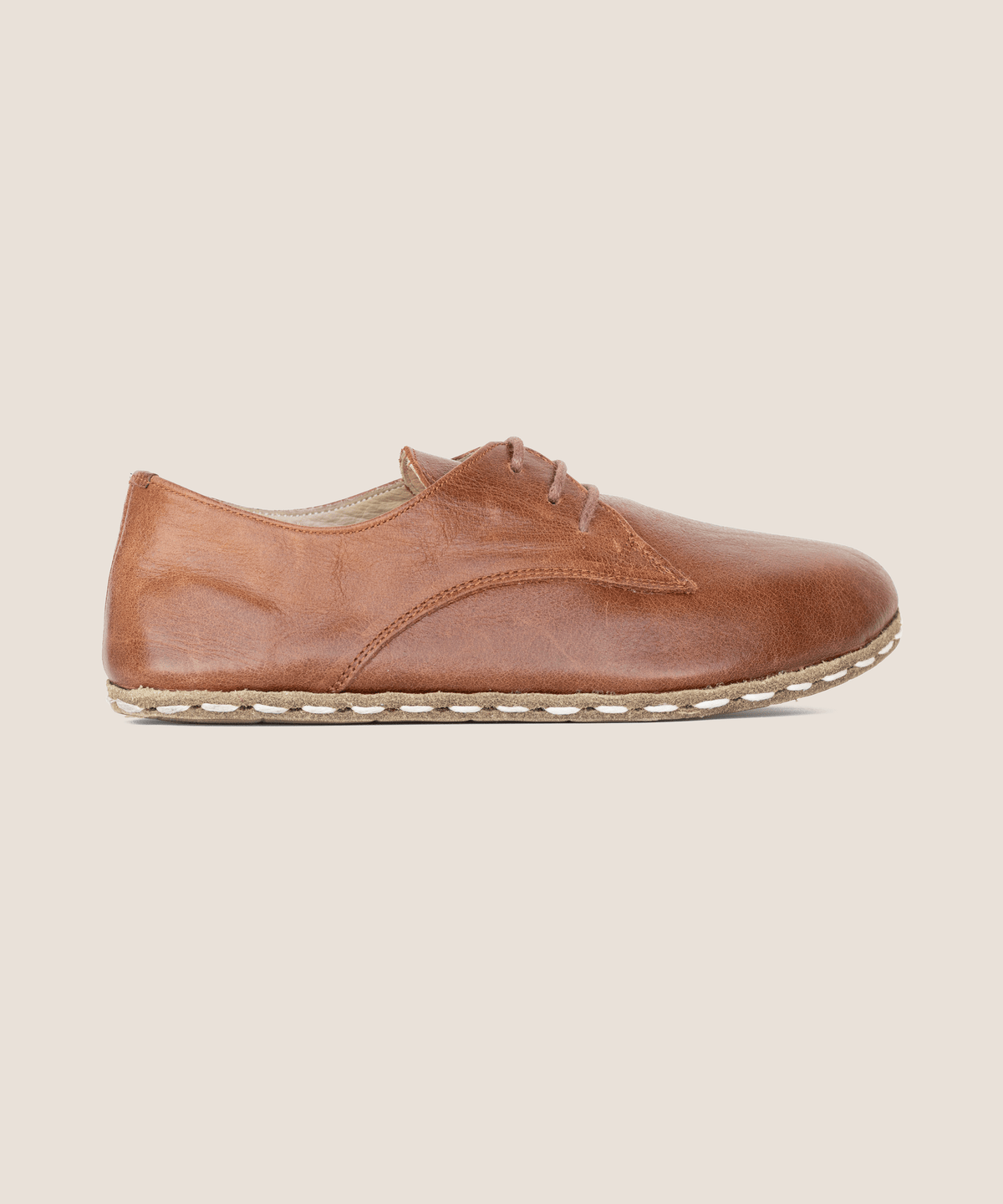
Barefoot dress shoes for men have a hard brief. They need room for the toes, a flat sole that bends, and still a shape you can wear with a jacket. Most pairs manage two of the three. This guide covers what makes a dress shoe "barefoot", how dressy one can look, which colour suits which occasion, how the pair should fit, and one detail most dress shoes leave out: a sole that stays open to the ground.
What makes a dress shoe a barefoot dress shoe?
Three things, and a conventional dress shoe usually misses all of them:
- A wide toe box. The front follows the shape of a foot, so the toes lie flat, side by side, instead of meeting in a point.
- Zero drop. Heel and forefoot sit at the same height. There is no raised heel tilting you forward.
- A thin, flexible sole. You can bend it by hand, and you feel the ground through it.
On these pairs the sole is buffalo leather, 5 to 8 mm thick, with no rubber or plastic anywhere in the shoe. The upper is A-grade cow leather, and a pair weighs about 300 g, depending on size.
Do barefoot dress shoes look professional?
A wide toe box gives a rounder front than a pointed city shoe. That is the trade, and no barefoot pair hides it completely. What keeps the shoe dressy is everything else:
- The leather. Smooth and dark reads as formal; suede and nubuck read as relaxed.
- The line. Few seams, slim laces, nothing added for show.
- The sole edge. A thick rubber sole is what most often makes a barefoot shoe look like a sneaker under a suit. A thin leather edge does not.
On the formality scale, a dark leather pair is at home in the office, at interviews, at dinner and at most weddings with a suit. For black tie, a traditional evening shoe is still the convention.
Oxford or loafer: which one for which occasion?
All three shapes below sit on the same buffalo leather sole.
- Oxford, $140. The dressiest of the range. Laces hold the foot, so the fit forgives a little more. The shoe for suits, interviews and weddings. Men's oxfords →
- Loafer, $140. A slip-on with an unbroken vamp. Business casual, travel, chinos and a knit. Men's loafers →
- Penny loafer, $155. A loafer with a strap across the top, a little more traditional. Men's penny loafers →
If you buy one pair to wear with tailoring, make it the oxford.
Black or brown: which colour and leather?
The men's oxford comes in twelve colours across five leather families. A simple rule: the darker and smoother the leather, the dressier the shoe.
- For evenings and dark suits: Raven Black in Zaragoza leather, thick and supple, or Midnight in matte nubuck.
- With navy and grey: Russet, a smooth brown, or Hickory in Zaragoza. Indigo, a smooth blue, for the less expected.
- Business casual: Earth, Umber, Sand and Ocean in Crazy leather, a waxed finish whose marks rub back under a thumb.
- Soft and relaxed: Ashen and Navy in nubuck, Beige Dawn in suede.
The loafer comes in the same twelve; Raven Black is the one for the office. The Leathers page shows every family side by side.
How should barefoot dress shoes fit?
A dress shoe is worn for long hours, often standing, so fit matters more than in a weekend shoe. Look for three things:
- The toes lie flat with room to spread, without pressing on the leather.
- The heel is held without slipping as you walk.
- The size fits from the first day. Leather gives a little in the first week: about 2 mm for Crazy leather, about 5 mm for Smooth, Suede and Nubuck.
There are two ways to order a size. On the product page you can measure your feet on paper, and the size is chosen for you from your measurements. Or you can choose the US size you usually wear; you may still send your measurements within one day of ordering, and if none arrive, the pair is made in the size you chose. If a size chosen from your measurements turns out wrong, the right pair is half price. How sizing works → · Size table →
Can a dress shoe also be a grounding shoe?
Yes, if nothing in the sole insulates. Many dress shoes sit on a rubber sole or a rubber heel, and rubber cuts the foot off from the ground below. These pairs keep the path open: the sole is all leather, and one copper rivet passes through it at the K1 point, under the front of the foot, where weight presses most. The rivet sits flush under the leather insole, so you do not feel it.
Where it connects, plainly:
- Connects: bare soil, grass, damp sand, damp concrete.
- Does not connect: asphalt, wood floors, carpet, and ground that is completely dry.
In the office it is simply a good leather shoe. On the lawn at a garden wedding, or a walk through the park at lunch, the path is open. The full mechanism is on the Grounding page.
Care: a shoe for dry days
Leather upper, leather sole: these pairs are not made for rain or puddles. If a pair does get wet, wear it while it is still damp; the leather dries in the shape of your foot. In the colder months they are best kept for indoor wear, at home and at the office, and for dry days outside.
What the price includes, and when to order
Each pair is cut after it is ordered and takes four business days to make. Shipping is in the price: 4 to 6 days to the United States, 3 to 4 days within Europe. In the United States, duties and taxes are included as well. Elsewhere, any import tax is set by your country and collected by the carrier on delivery. If the pair is not right, you have fourteen days to return it unworn.
For a wedding or an interview, order about three weeks ahead. That covers the making, the delivery and a few days of wear before the day.
Frequently asked
Are barefoot dress shoes formal enough for a wedding?
With a suit, yes. Choose a dark, smooth or Zaragoza leather such as Raven Black or Russet. For black tie, a traditional evening shoe is still the convention.
Is there any rubber in the shoe?
No. The sole is buffalo leather, the upper is cow leather, and there is no rubber or plastic anywhere.
Do grounding dress shoes work in the office?
Not on wood floors or carpet, which do not conduct. The pair connects on bare soil, grass, damp sand and damp concrete.
Will the shoes stretch?
A little: about 2 mm in the first week for Crazy leather, about 5 mm for Smooth, Suede and Nubuck. Choose a size that fits from the first day.
How long until the pair arrives?
Four business days to make, then 4 to 6 days to the United States or 3 to 4 days within Europe.